


What Is H4CBD? A Complete 2026 Guide to Hydrogenated CBD
Key Takeways
- H4CBD, or hexahydrocannabidiol, is a semi-synthetic hydrogenated form of regular CBD made by adding four hydrogen atoms to the CBD molecule.
- H4CBD appears to interact more directly with CB1 receptors than conventional CBD, so many users report deeper relaxation, mild euphoria, and a light buzz rather than a heavy THC high.
- Claims that H4CBD is “100 times stronger than CBD” are largely speculative and come from limited receptor-binding data; in real use, many describe it as closer to 2–3 times stronger than CBD.
- H4CBD is usually sold as h4cbd distillate and blended with other cannabinoids in vapes, gummies, tinctures, and topicals for stability and mood support.
- H4CBD’s legal status depends on hemp rules, state laws, and changing cannabinoid regulations. Alt Super Store only ships hemp-derived, third-party lab-tested products where allowed.
Introduction: Why People Are Talking About H4CBD in 2026

Since 2020, rare cannabinoids like Delta-8, HHC, THCP, THCv, and compliant Delta-9 have pushed the cannabis industry far beyond traditional cbd. H4CBD is one of the new cannabinoids gaining attention in 2025–2026 because it sits between standard cbd and mild intoxicating compounds.
This guide is for adults 21+ who know regular cbd but want to understand what is h4cbd, how it works, how it compares with HHC and THC products, and what to check before trying it from a retailer like Alt Super Store.
What Is H4CBD? (Definition & Chemistry)
H4CBD is hydrogenated cbd: a synthesized cannabinoid made from hemp derived cbd by chemical hydrogenation. H4CBD is produced by adding hydrogen atoms-specifically four additional hydrogen atoms-to the cbd molecule through a process called hydrogenation, altering its chemical structure, chemical makeup, and natural properties.
Hydrogenated cannabinoids are cannabinoids whose carbon carbon double bonds are saturated with hydrogen. The hydrogenation process is similar to turning vegetable oil into margarine: the chemical process inserts hydrogen atoms and converts double bonds into single bonds. In CBD, cbd hydrogenation changes the limonene-like “head” area, creating a hydrogenated version with unique properties.
H4CBD was described in medicinal chemistry literature in the 1940s and re-examined in a 2006 receptor study on cannabidiol derivatives. It only became commercially relevant after the hemp market learned that virtually any isolated cannabinoid could be modified into synthetic and natural derivatives.
Common names include H4-CBD, hydrogenated form of cbd, THD, and hydrogenated form. It is not a thc derivative and is not egyptian hashish, cannabis indica flower, or natural cbd. CBD is a natural compound and natural cannabinoid that can occur naturally in hemp; H4CBD is purely lab-made for commercial use and does not occur naturally in hemp or cannabis in meaningful amounts.
H4CBD as a Hydrogenated Cannabinoid
Hydrogenated cannabinoids include HHC from THC, plus H2CBD and H4CBD from CBD. H4CBD is technically considered a synthetic cannabinoid because it is not found naturally in cannabis and must be artificially created through the hydrogenation of CBD, despite being derived from natural CBD.
This matters for product quality. The production of H4CBD requires hydrogen gas and a catalyst, typically nickel, platinum, or palladium. Reputable producers then remove residual catalysts, solvents, and other compounds before creating h4cbd distillate.
Hydrogenation also improves stability. H4CBD exhibits improved chemical stability, making it resistant to oxidation and crystallization, which can support a longer shelf-life than standard CBD.
How Does H4CBD Work in the Body?
CBD and H4CBD interact with the endocannabinoid system, including CB1 and CB2 cannabinoid receptor pathways. Conventional CBD share some soothing traits with H4CBD, but conventional cbd has very little affinity for CB1 receptors in the central nervous system.
H4CBD is reported to have a higher affinity for CB1 neuroreceptors compared to conventional CBD, which may contribute to its psychoactive effects. H4CBD is also reported to have a higher affinity for CB1 neuroreceptors compared to CBD, which traditionally has little to no affinity for these receptors, suggesting different effects on the body.
Available evidence is limited. A 2006 in vitro study found hydrogenated CBD derivatives had surprisingly high affinity for CB1 receptors compared with CBD, while a 2017 review noted that new cannabidiol derivatives still need human data. You can review the foundational pharmacology in the Journal of Medicinal Chemistry abstract.
Receptor Binding & “Times Stronger Than CBD” Claims
The claim that H4CBD is 100 times stronger than CBD is largely speculative and based on limited research, with some studies suggesting increased activity at CB1 receptors compared to CBD. The claim that H4CBD is 100 times stronger than CBD is also not a direct measure of how “high” someone will feel.
In practice, CBD is almost inactive at CB1, so higher affinity still does not make H4CBD comparable to Delta-9 THC. Many users say H4CBD feels about 2–3 times stronger than CBD for relaxation and mood support.
H4CBD may also interact with CB2 receptors linked to immune function. H4CBD may help ease pain and provide relief through its interaction with CB2 receptors, but strong clinical proof is not available.
Subjective Effects Reported by Users
Users have described the effects of H4CBD as similar to taking a large dose of CBD combined with a small dose of THC, leading to a mild sense of intoxication without a full high. H4CBD does not produce the heavy, intoxicating high associated with THC but can create a noticeable sense of euphoria and deep relaxation.
While H4CBD does not produce a traditional high, it can induce a feeling of relaxation and mild euphoria, which some users compare to the effects of caffeine or nicotine. Users have reported that H4CBD can help reduce anxiety and promote relaxation without the intoxicating effects typically associated with THC.
Sensitive users may still feel drowsiness, slowed reaction time, or intoxicating effects. Treat H4CBD more carefully than traditional CBD.
H4CBD vs. Regular CBD: Key Differences
H4CBD vs regular CBD comes down to source, structure, effects, stability, and risk. Both cbd products may begin with hemp distillate, but cbd and h4cbd are not identical.
Source & Production Process
Regular cbd is extracted directly from hemp grown under the 2018 Farm Bill and refined into full-spectrum, broad-spectrum, or isolated cannabinoid forms. H4CBD requires a synthetic process that CBD does not.
While both H4CBD and CBD are derived from hemp, CBD is a natural extract, whereas H4CBD is considered a synthetic cannabinoid due to its hydrogenation process. H4CBD and CBD differ not only in their chemical structure but also in their production methods.
Finished H4CBD is often distilled into 85–99% total hydrogenated cannabinoids, depending on the process. Good manufacturers do not synthesize cbd from scratch; they convert purified CBD created from hemp.
Chemical Structure & Stereoisomers
CBD is C21H30O2, while H4CBD is C21H34O2 because of four hydrogen atoms. Those four additional hydrogen atoms replace two double bonds with single bonds.
H4CBD may include 9R and 9S forms. Early evidence suggests the 9R form may bind CB1 receptors more strongly and may contribute more to psychoactive effects, but COAs do not always show this ratio.
Effects, Potency & “Times Stronger Than CBD” in Real Life
Regular CBD is generally non-intoxicating. H4CBD keeps roughly the same effects many people like about CBD-calm, body comfort, smoother mood-but adds mild psychoactive substances-like qualities for some users.
Preliminary pharmacological models indicate that H4CBD may provide a stronger sense of calm and relaxation than standard CBD without psychoactive effects in some contexts, while real users still report mild psychoactivity, which is why some shoppers pair it with rotating weekly cannabis deals to experiment affordably.
- Choose CBD if you want zero buzz, daytime focus, or the longest safety history.
- Consider H4CBD if you want enhanced evening relaxation and understand the mild impairment risk.
- Avoid stacking H4CBD with strong THC until you know your tolerance.
Formulation Stability & Practical Advantages
CBD isolate can crystallize in strong tinctures, vapes, or topicals. Due to its stability, H4CBD is ideal for manufacturing vape cartridges, topicals, and edibles that are smooth and retain a longer shelf-life.
Formulators also use H4CBD as a base for other cannabinoids such as CBN, CBG, CBC, and THCV. Most cannabinoids share formulation challenges; hydrogenated cannabinoids can help reduce clouding, clogging, and separation.
H4CBD vs. Other Cannabinoids (HHC, Delta‑8, THCP & More)
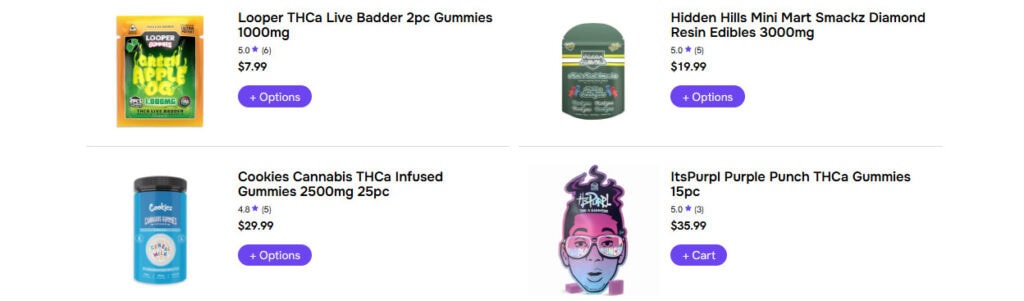
Compared with popular cannabinoids, H4CBD is best viewed as “enhanced CBD,” not a full recreational high, unlike more overtly intoxicating options such as Hidden Hills THC vapes and edibles.
H4CBD vs. HHC (Hydrogenated THC)
Both are hydrogenated cannabinoids, but HHC comes from THC or THC isomers, while H4CBD comes from CBD. HHC is clearly intoxicating; H4CBD is usually milder and more CBD-like.
H4CBD vs. Delta‑8 & Delta‑9 THC
Delta-8 and Delta-9 THC products are chosen mainly for psychoactive effects. A simple scale is: CBD ≈ none, H4CBD ≈ low, Delta-8 ≈ moderate, Delta-9 ≈ high.
Delta-9 remains the key federally controlled THC benchmark. Delta-8 and H4CBD are made from hemp derived CBD and occupy more complex legal spaces, which also affects infused formats like THC pre-roll products.
H4CBD vs. Other Rare Cannabinoids (CBN, CBG, THCV, etc.)
CBN, CBG, CBC, and THCV are distinct cannabinoids that can occur naturally in cannabis, while H4CBD is a hydrogenated version of CBD. Three cannabinoids often used with H4CBD are CBN for nighttime blends, CBG for daytime balance, and CBC for broader entourage-style effects.
H4CBD Distillate: What It Is & Why Formulators Use It
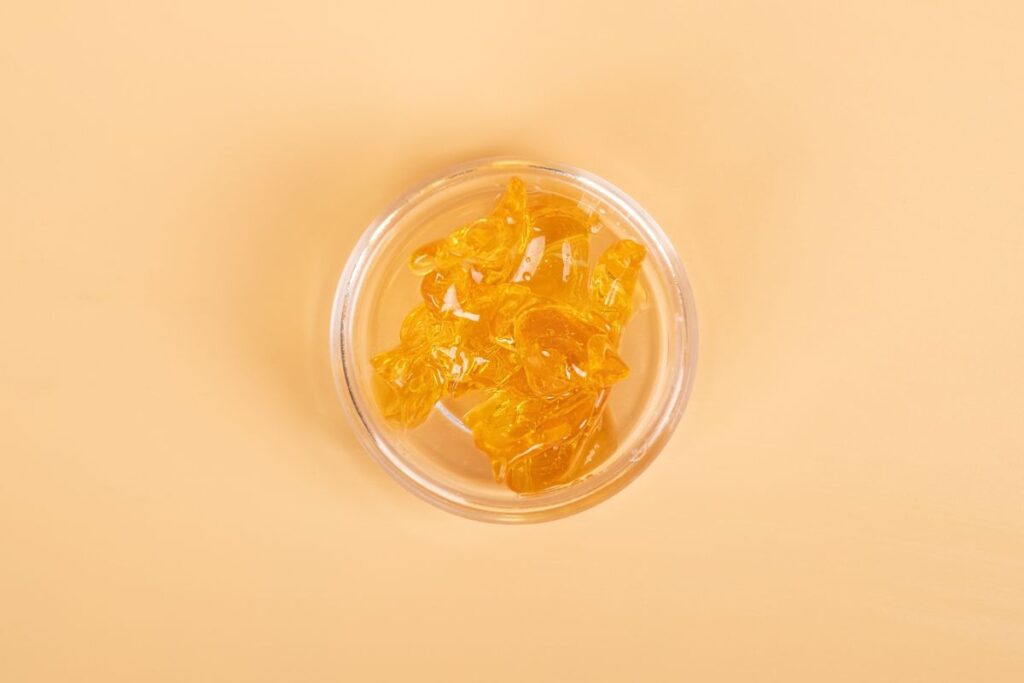
H4CBD distillate is a thick, amber oil containing high levels of H4CBD with waxes and many other compounds removed. It mixes well with carrier oils and terpenes, which makes it useful in vapes, gummies, tinctures, and topicals.
Alt Super Store looks for COAs that show cannabinoids, Delta-9 THC content, residual solvents, heavy metals, pesticides, microbials, and where available, details about epimers, even on discounted sale cannabis products.
Performance Benefits in Real Products
In real products, H4CBD can mean fewer clogged vape carts, smoother topicals, winter-stable tinctures, and longer shelf-life edibles. Some vape blends may use H4CBD with 3–8% terpenes; some topicals may use 3–10% H4CBD for texture and comfort.
Potential Benefits & Risks of H4CBD
No cannabinoid product sold by Alt Super Store is intended to diagnose, treat, cure, or prevent any disease. H4CBD research is limited, and most claims come from early models, receptor work, and user reports.
Potential Benefits: What Users & Early Research Suggest
H4CBD may share some therapeutic benefits associated with CBD-like pathways, including relaxation, body comfort, and inflammatory balance. H4CBD is thought to promote better sleep and lower inflammation, making it a potential option for those suffering from chronic pain, but this remains unproven in human clinical trials.
H4CBD shows potential in metabolic syndrome management as studies suggest it significantly reduces visceral abdominal fat and improves glucose response. Initial findings suggest that H4CBD may aid in weight management, as observed in preliminary studies conducted on rats.
User-reported themes include:
- deeper relaxation after work
- easier unwinding at night
- smoother mood
- more body comfort than a usual CBD dose
- better sleep onset for some users
Talk with a healthcare professional before using H4CBD if you take medications or have a medical condition.
Risks, Side Effects & Unknowns
Possible side effects include dry mouth, red eyes, dizziness, drowsiness, increased heart rate, anxiety, or paranoia at high doses. Because H4CBD engages CB1 receptors more than regular CBD, avoid driving, alcohol, sedatives, and machinery until you understand your response.
Due to its interaction with CB1 receptors, using H4CBD carries a risk of cross-reactivity on standard drug screenings, potentially triggering a false positive for THC. Product quality is another key risk because poorly made synthetic cannabinoid products can contain residual catalysts, solvents, or unknown byproducts.
Legal Status of H4CBD in the U.S. (2026 Overview)

Under the 2018 Farm Bill, any cannabinoid that isn’t delta-9 THC is considered industrial hemp, which includes H4CBD, although its legal status is still debated. At the federal level, hemp products must contain less than 0.3% Delta-9 THC by dry weight.
The DEA and FDA have not issued H4CBD-specific rules as of May 27, 2026. However, regulators are scrutinizing semi-synthetic cannabinoids and hydrogenated cannabinoids, as seen in recent DEA attention to HHC reported by NORML.
As of now, H4CBD is not listed as an addictive substance under government regulations in some regions, indicating a potential legal pathway for its use.
H4CBD vs. CBD Legality
CBD has a more established footprint than H4CBD. H4CBD is mildly psychoactive and semi-synthetic, so it may face more scrutiny.
The legality of H4CBD can vary by location, as cannabinoid regulations are rapidly changing and some states may impose restrictions similar to those on CBD products. Alt Super Store checks state rules and only ships where products are currently allowed.
How to Use H4CBD Products Safely
Start low, go slow, and do not test multiple new cannabinoids at once.
Choosing a Format (Vapes, Edibles, Tinctures & Topicals)
Vapes and disposable vape products act within minutes and fade faster. Gummies, capsules, and tinctures can take 30–90 minutes and last longer. Topicals are usually chosen for localized comfort and are less likely to cause systemic psychoactive effects when used as directed.
Dosing Guidelines & Stacking with Other Cannabinoids
For adults, a cautious first trial is 5–10 mg in an edible or tincture, 1–2 short vape puffs, or a thin topical layer on a small skin area. Keep a log of dose, time, and effects.
Many users combine CBD and H4CBD to keep a familiar base while slightly increasing relaxation. When stacking, start with about half your usual CBD dose and add only a small amount of H4CBD.
Where H4CBD Fits in Alt Super Store’s Catalog
Alt Super Store focuses on third-party lab-tested, hemp-derived products, including popular Delta-8 products, compliant Delta-9, THCa flower, HHC, THCP, THCV vape cartridges and edibles, CBD, kratom, mushroom supplements, and emerging cannabinoid options like H4CBD as reliable sources become available.
Expect H4CBD to appear in disposables, cartridges, gummies, tinctures, and blends with other rare cannabinoids where legal, especially as part of new arrival cannabinoid products. You also get 21+ age restrictions, discreet packaging, clear lab reports, and customer support that can compare products without giving medical advice.
FAQ
Will H4CBD Show Up on a Drug Test?
Standard workplace tests look for THC metabolites, not H4CBD specifically. However, cross-reactivity, trace Delta-9 THC, or contamination can still cause a positive result. Alt Super Store cannot guarantee any product will result in a negative drug test. If testing matters, avoid H4CBD and other psychoactive substances.
Can I Drive or Operate Machinery After Taking H4CBD?
No. H4CBD is usually milder than THC, but it can still cause drowsiness, altered perception, and slower reaction time. Test it at home in the evening, especially during the first 4–6 hours after use.
Is H4CBD a Good Choice for Beginners Who Have Never Used Cannabinoids?
Complete beginners should usually start with CBD because it has a longer track record and minimal intoxication risk. H4CBD may fit someone seeking stronger-than-CBD relaxation, but first doses should be very low. People with anxiety, heart issues, or THC sensitivity should speak with a healthcare professional first.
Can I Take CBD and H4CBD Together?
Yes, many formulas combine both cbd types.


